

Keywords
How to Cite
Abstract
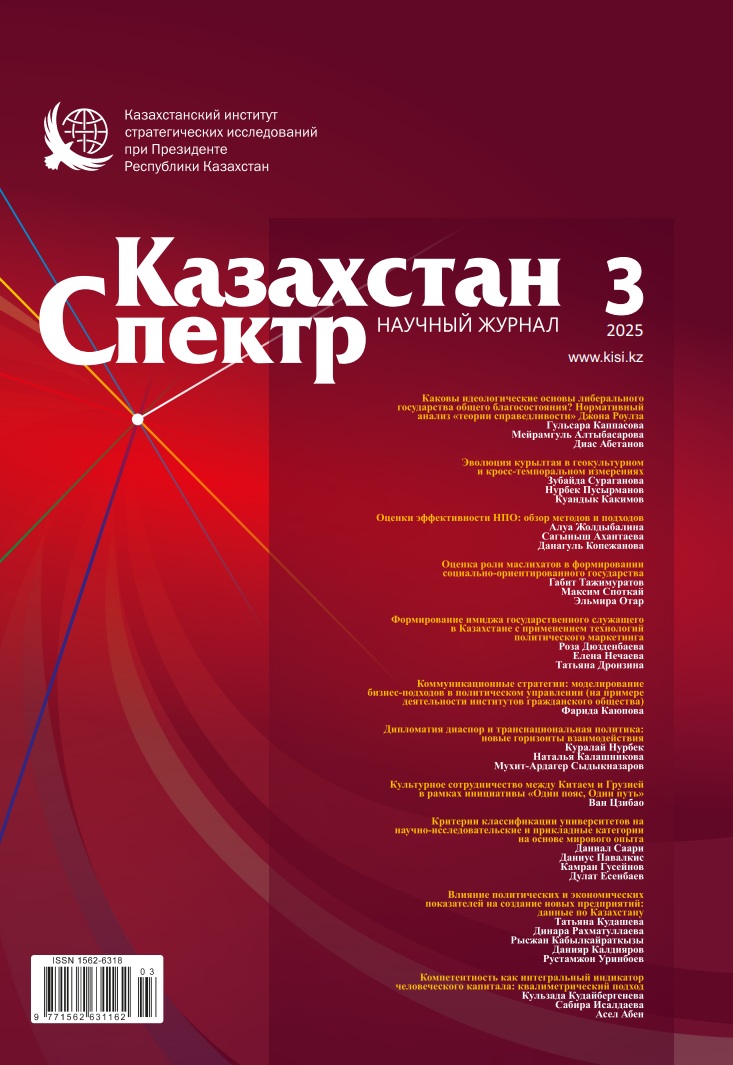
In this paper we aim to analyze how well the famous John Rawls’ theory of justice provides ideological underpinning for the contemporary liberal democracies. We argue that Rawls while formulating his ‘difference principle’ did not clarify what he had meant by ‘the least well off’ and did not pay enough attention to natural primary goods, that entailed implications going against our intuitive conviction of justice, and which are hardly applicable in explaining any developments of social and political life. But we also argue that those implications are mainly the unavoidable consequences of the practical politics in the Western democracies, and it is plausible that seeing this Rawls purposely chose to formulate his argument in that way.

This work is licensed under a Creative Commons Attribution 4.0 International License.
Copyright (c) 2025 Kazakhstan-Spectrum