

Keywords
How to Cite
Abstract
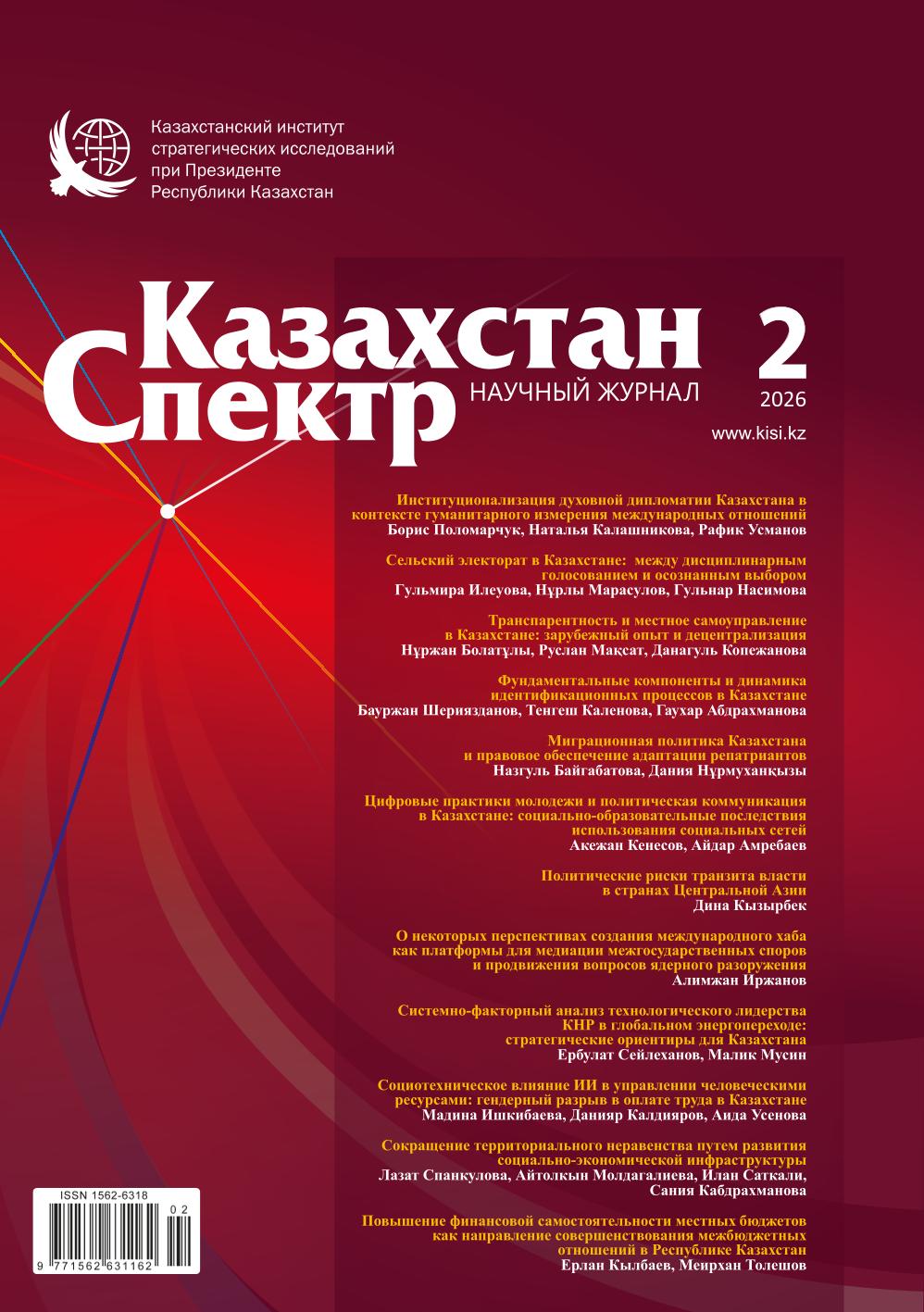
This study examines patterns of social media use among youth in Kazakhstan and analyzes how these digital practices relate to the evolving infrastructural conditions of political communication. The research is based on a quantitative interviews cross-sectional survey and stratified quota sampling ensured representation by gender, age, and place of residence. Data were analyzed using descriptive statistics, regression analysis and mediation modeling. The findings indicate youth digital engagement reflect structural shifts in communication environments. The study concludes that modern political communication requires a revision of established theoretical frameworks and greater methodological openness to cross-cultural comparison. While the study is situated within the broader field of political communication, it does not directly measure political participation or political efficacy. Instead, it focuses on socio-educational dimensions of digital engagement that indirectly shape the conditions under which political communication occurs. In this regard, social media are conceptualized as infrastructural environments structuring exposure to politically relevant content rather than as direct instruments of political mobilization.

This work is licensed under a Creative Commons Attribution 4.0 International License.
Copyright (c) 2026 Kazakhstan-Spectrum