

Keywords
How to Cite
Abstract
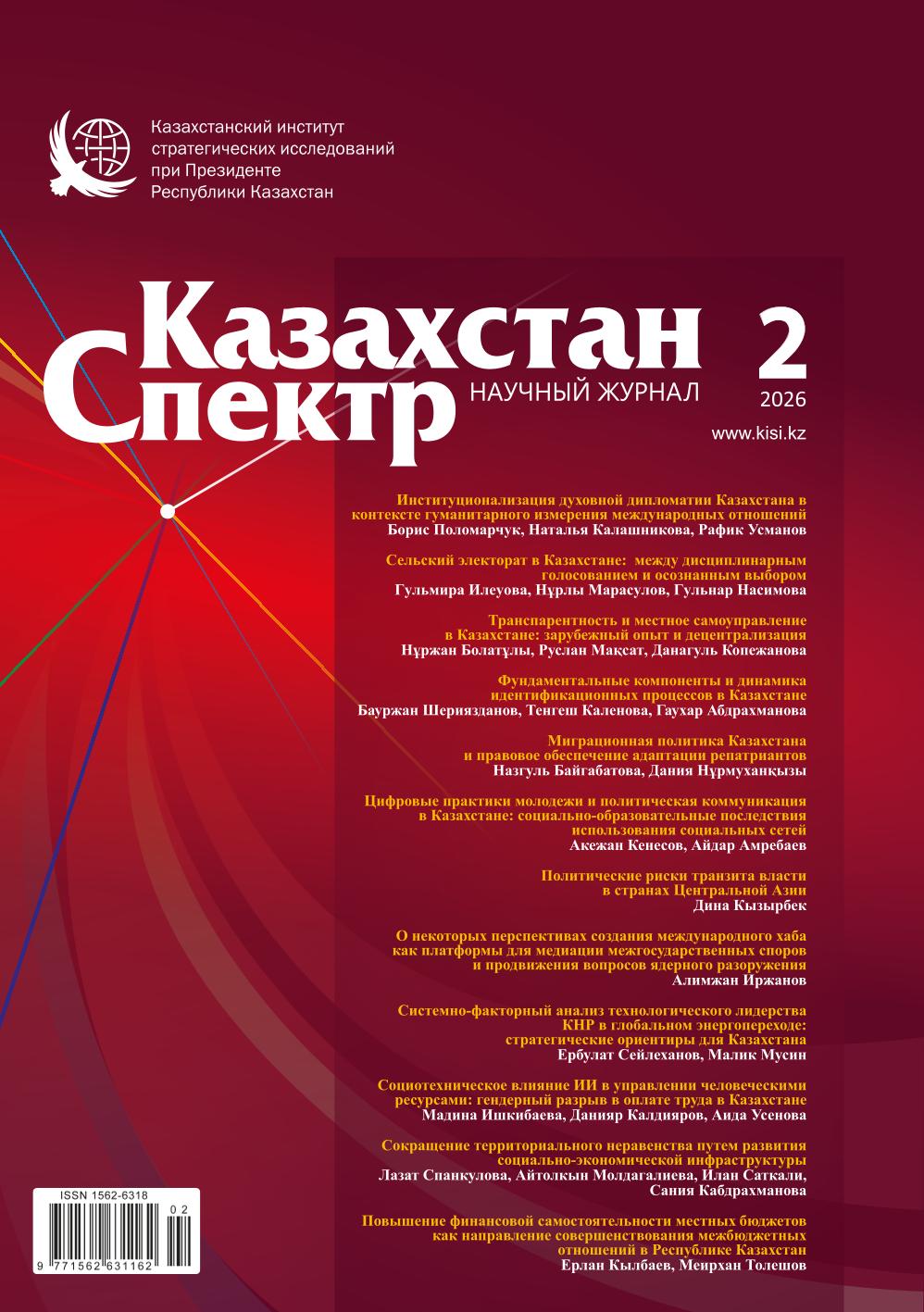
This study examines the socio-economic determinants of territorial inequality in the regions of Kazakhstan using the dynamic panel data method. The analysis focuses on differences in income and living standards, as well as the role of macroeconomic and social factors, including health, inflation, youth unemployment, and poverty levels. The empirical framework is based on a dynamic panel model calculated using the System Generalized Method of Moments (System GMM), which allows for endogeneity, unobserved regional heterogeneity, and persistence effects.
The dataset covers observations at the regional level for the period 2001-2024, subject to data availability. The results show that improving the health status of the population and reducing poverty contribute to reducing territorial differences, while inflationary pressures and youth unemployment exacerbate regional inequality. The results obtained emphasize the importance of a coordinated socio-economic policy aimed at strengthening human capital and social protection mechanisms as effective tools for reducing territorial inequality.

This work is licensed under a Creative Commons Attribution 4.0 International License.
Copyright (c) 2026 Kazakhstan-Spectrum