

Keywords
How to Cite
Abstract
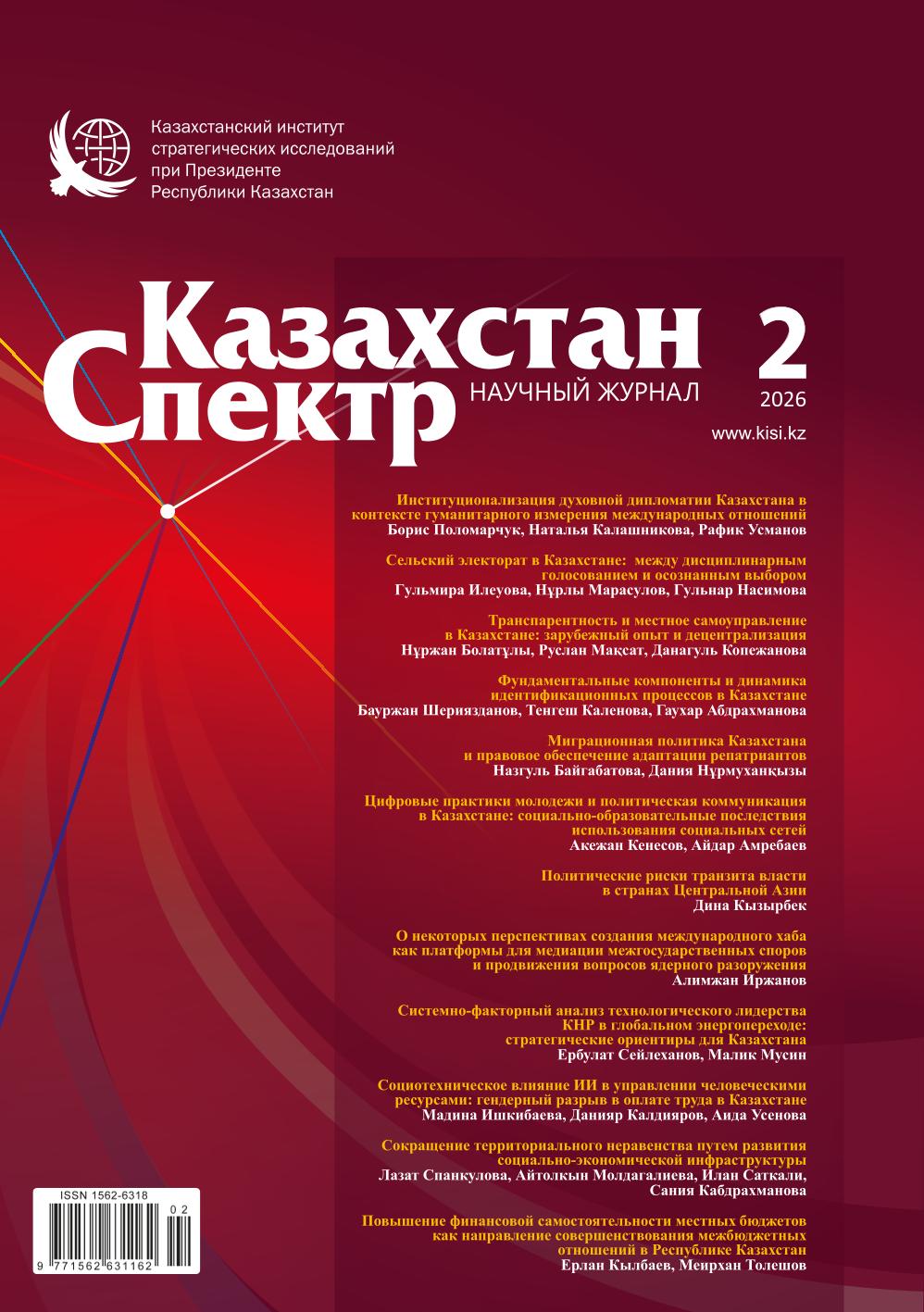
This article examines the issues of strengthening the financial autonomy of local budgets in the Republic of Kazakhstan within the context of improving intergovernmental fiscal relations. The purpose of the study is to identify the institutional and financial constraints affecting regional budget autonomy and to substantiate priority directions for its enhancement. The methodological framework of the research is based on comparative, institutional, and statistical analysis, examination of the regulatory framework of the Republic of Kazakhstan, as well as comparison of domestic practices with international experience in fiscal decentralization.
The study identifies key features of the current budget system, characterized by the formal expansion of regional powers alongside the continued high dependence of subnational budgets on intergovernmental transfers. It is established that, despite the growth of local budget revenues, a structural imbalance persists between delegated expenditure responsibilities and the limited revenue base, which constrains the development of regional tax capacity and limits financial autonomy.
Based on the findings, the study substantiates priority directions for improving intergovernmental fiscal relations, including the expansion of regional revenue sources, modernization of transfer policies, development of incentive mechanisms, and strengthening of institutional foundations of budget governance. The practical significance of the study lies in the possibility of applying its findings in the development of budget policy measures aimed at enhancing the financial sustainability of regions.

This work is licensed under a Creative Commons Attribution 4.0 International License.
Copyright (c) 2026 Kazakhstan-Spectrum